Finding the right shade plants can make a big difference when you're planning an Australian garden with limited sunlight. Whether you have a completely shaded corner, filtered light beneath trees, or a garden bed that receives only morning sun, there are plenty of plants that can thrive in the right conditions.
The best shade plants depend on more than just how much sunlight an area receives. Soil moisture, drainage, climate and competition from tree roots can all affect how well a plant grows. In this guide, you'll discover 20 shade plants that can suit different Australian garden conditions, along with practical tips for choosing, planting and caring for them.
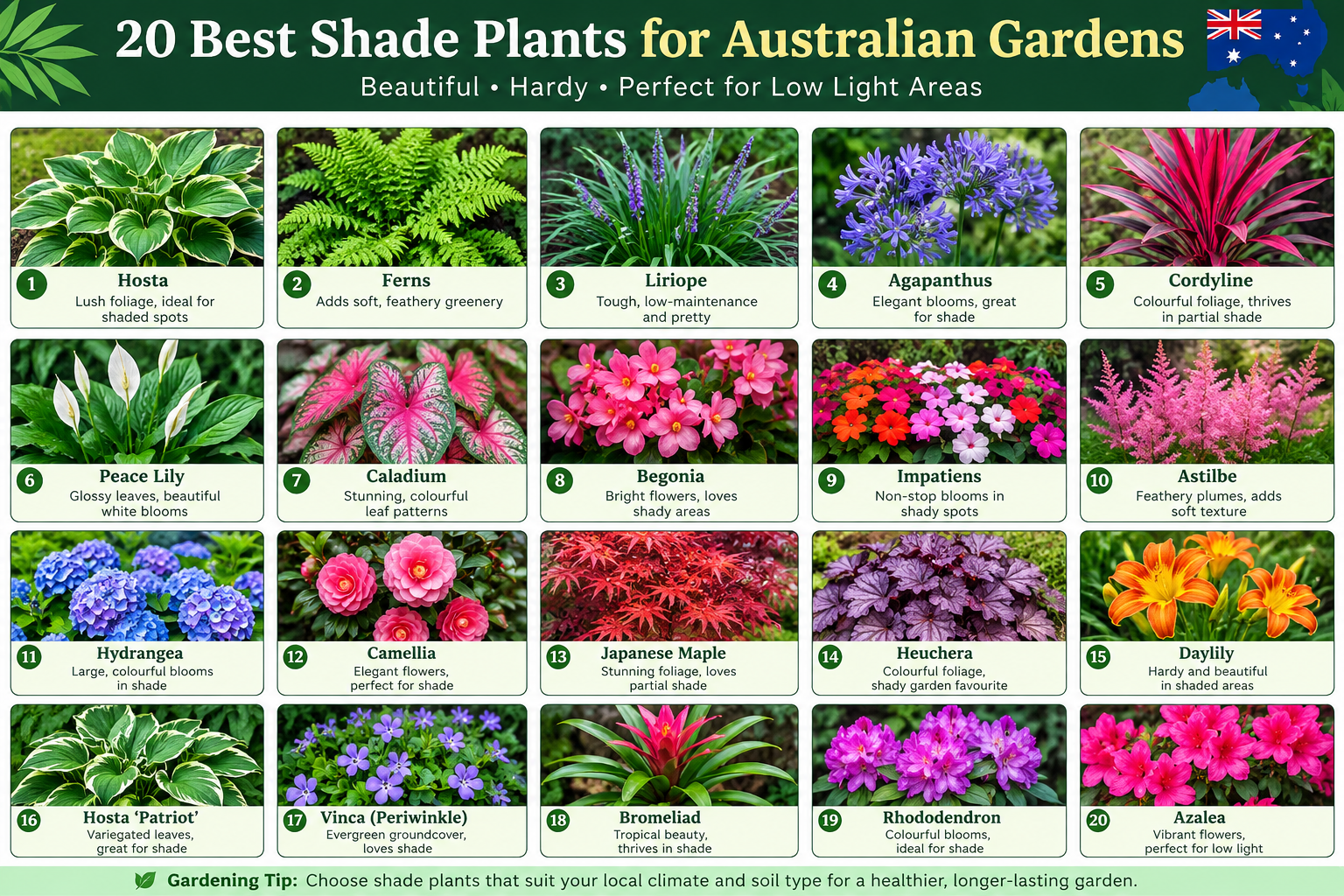
20 Best Shade Plants for Australian Gardens
Do you have a shady corner where grass and sun-loving plants refuse to grow? You're not alone. Australian gardens can have challenging shady areas beneath mature trees, beside fences, and around sheltered patios. The good news is that shade doesn't mean your garden has to look dull.
The best shade plants for Australian gardens can bring lush foliage, colourful flowers, and year-round interest to areas with limited sunlight. The key is choosing plants that match your garden's light level, soil, climate, and moisture conditions.
From Australian native plants to flowering shrubs, ferns, groundcovers, and hardy foliage plants, there are plenty of options for shady spaces. Here are 20 plants worth considering for your garden.
Why Choose Shade Plants for Your Australian Garden?
Shade-tolerant plants are adapted to growing with less direct sunlight. Some prefer bright filtered light, while others can handle deeper shade.
In Australian gardens, shade can also create different growing conditions. Areas beneath large trees may have dry soil because tree roots compete for water, while sheltered spaces may stay cooler and more humid.
Understanding your garden's conditions before planting will help you choose plants that are more likely to thrive.
Light Shade
Light shade usually means the area receives several hours of indirect or filtered sunlight. Many flowering plants and shrubs perform well here.
Dappled Shade
Dappled shade occurs when sunlight passes through tree branches and creates changing patches of light. This can be an excellent environment for many woodland-style plants.
Deep Shade
Deep shade receives very little direct sunlight. Foliage plants such as aspidistra and certain ferns are often better suited to these conditions.
20 Shade Plants to Grow in Australian Gardens
- Bird's Nest Fern
Bird's nest fern (Asplenium nidus) produces large, bright-green leaves that form an attractive rosette. It is ideal for sheltered, shady areas and prefers moist, well-drained soil.
- Lilly Pilly
Lilly pilly (Syzygium species) is a versatile Australian native that can tolerate partial shade. Depending on the variety, it can be grown as a hedge, screen, or feature shrub.
- Native Ginger
Native ginger (Alpinia caerulea) is a lush Australian plant with broad green foliage. It works particularly well in sheltered garden beds with good soil moisture.
- Clivia
Clivia is a reliable flowering plant for shady areas. Its strap-like leaves remain attractive throughout the year, while colourful flowers brighten darker garden spaces.
- Camellia
Camellias are popular shrubs that produce beautiful flowers during cooler months. They prefer filtered light or gentle morning sun and well-drained, slightly acidic soil.
- Gardenia
Gardenias are loved for their glossy foliage and fragrant white flowers. They perform best in warm areas with bright filtered light and protection from harsh afternoon sun.
- Hellebore
Hellebores are excellent for adding seasonal colour to shady garden beds, particularly in cooler parts of Australia. They prefer rich, well-drained soil.
- Impatiens
Impatiens are useful when you want bright flowers in a shady garden. They can be grown in containers, borders, and sheltered garden beds and need regular moisture during hot weather.
- Begonia
Begonias offer attractive flowers and foliage and can perform well in filtered light or partial shade. They are also excellent choices for pots and balconies.
- Japanese Maple
Japanese maple (Acer palmatum) can make a beautiful feature plant in a sheltered garden. In warmer parts of Australia, protect it from hot afternoon sun and drying winds.
- Bromeliads
Bromeliads are excellent for shaded courtyards and tropical-style gardens. Their architectural foliage and colourful flowers can add interest to darker spaces.
- Peace Lily
Peace lily (Spathiphyllum) has lush foliage and elegant white flowers. In warm areas, it can grow outdoors in a sheltered position with indirect light.
- Native Violet
Native violet (Viola hederacea) is a low-growing Australian native that makes an attractive groundcover for moist, shaded areas. Its small flowers add extra colour.
- Correa
Correas are hardy Australian native shrubs with attractive tubular flowers. Many varieties tolerate partial shade and can provide habitat and food for local wildlife.
- Plectranthus
Plectranthus varieties are useful foliage plants for shady areas. Depending on the variety, they can provide green, silver, or purple foliage.
- Fuchsia
Fuchsias produce distinctive hanging flowers and can perform well in cooler, sheltered parts of Australia. Give them filtered light and consistent moisture.
- Heuchera
Heuchera is mainly grown for its colourful foliage. It is useful for adding texture to cooler gardens with morning sun or light shade.
- Maidenhair Fern
Maidenhair ferns have delicate foliage that creates a soft woodland appearance. They prefer sheltered, humid conditions and consistent moisture.
- Aspidistra
Aspidistra, also called the cast-iron plant, is known for its toughness and ability to tolerate low-light conditions. It is a useful choice for difficult shady areas.
- Kangaroo Paw
Kangaroo paw is a popular Australian native known for its colourful flowers. It generally prefers more sunlight, but some varieties can tolerate bright filtered light. Avoid planting it in waterlogged soil.
How to Choose the Right Shade Plants
Choosing the right plant is easier when you understand the conditions in your garden.
- Check the Amount of Light
Observe the area throughout the day before buying plants. Notice whether it receives morning sun, afternoon shade, dappled light, or almost no direct sunlight.
- Consider Your Australian Climate
Australia has many different climate zones. A plant that performs well in Melbourne may not be suitable for a tropical garden in Queensland.
Choose species and cultivars that are suitable for your local conditions.
- Check Soil Moisture
Don't assume every shady area is moist. Soil beneath mature trees can become surprisingly dry because tree roots compete for available water.
- Consider Plant Size
Check the mature height and width of each plant before planting. Giving plants enough space reduces competition and improves airflow.
- Choose a Mix of Plants
Combine different foliage shapes, colours, heights, and textures to create a more natural-looking shade garden.
How to Plant and Care for Shade-Loving Plants
Once you've chosen suitable plants, good planting and ongoing care will help them establish successfully.
• Improve the Soil Add suitable compost or organic matter if your soil is poor. Avoid digging aggressively beneath established trees because their roots can be damaged.
•Water Carefully New plants need regular watering while they establish. After that, watering requirements depend on the plant, season, soil, rainfall, and local climate. Always check the soil before watering rather than following a fixed schedule.
• Apply Mulch Organic mulch can help retain soil moisture and moderate soil temperature. Keep mulch away from plant stems and tree trunks.
• Provide Good Drainage Shade does not always mean wet soil. Poor drainage can cause root problems, especially for plants that prefer drier conditions.
• Prune When Needed Remove dead, damaged, or overcrowded growth when appropriate for the plant. Good airflow can help keep the garden healthier.
• Feed According to Plant Needs Don't over-fertilise shade plants. Many grow more slowly than plants in full sun and may only need occasional feeding during active growth.
Common Mistakes and Expert Tips for Shade Gardens
A successful shade garden is mostly about matching plants to the conditions rather than forcing unsuitable plants to grow.
Common Mistakes to Avoid
• Assuming all shade is the same. • Overwatering plants in poorly drained soil. • Ignoring competition from mature tree roots. • Choosing plants only because they look attractive. • Planting too closely together. • Using too much fertiliser. • Choosing plants that are not suited to your local climate.
• Expert Tips Think about microclimates in your garden. A wall, fence, tree, or nearby building can change temperature, wind exposure, and soil moisture.
Use layers to create a fuller garden. Combine taller shrubs with medium-sized foliage plants and low-growing groundcovers.
If an area beneath a tree is too difficult to plant, consider using containers. Containers give you more control over soil quality, watering, and plant placement.
For the best results, start with a small shady area and experiment with plants that suit your local conditions. Once they establish successfully, you can expand the planting scheme.


Comments