Powdery mildew can appear almost overnight, covering leaves with a white, dusty coating and making healthy plants look stressed. If you want to know how to get rid of powdery mildew naturally, the good news is that you can often control a mild infection without harsh chemical treatments. The key is to act early, improve airflow, remove badly affected growth, and use gentle treatments consistently. Powdery mildew is common on vegetables, herbs, flowers, and ornamental plants, especially when leaves stay dry but humidity around the plant is high. In this guide, you’ll learn seven practical steps to control powdery mildew naturally, reduce the chance of it spreading, and help your plants recover with simple garden-friendly methods.
How to Get Rid of Powdery Mildew Naturally: 7 Easy Steps
What Is Powdery Mildew?
Powdery mildew is a group of fungal diseases that appears as white or grey powder on the surface of plant leaves, stems, and sometimes flowers. Unlike many fungal problems, it does not require leaves to remain wet for long periods. It can spread when conditions around the plant are humid, crowded, or poorly ventilated.
The infection often starts as a few small white patches before spreading across larger areas of foliage. As the disease becomes more severe, affected leaves may turn yellow, curl, dry out, or fall prematurely.
Common plants affected by powdery mildew include:
• Cucumbers and other cucurbits • Roses •Zucchini and squash •Tomatoes • Grapes • Basil and other herbs •Ornamentals and flowering plants
Early treatment is usually much easier than trying to rescue a plant covered with severe mildew.
How to Get Rid of Powdery Mildew Naturally: 7 Steps
The best approach is to combine several simple methods rather than relying on one treatment. Start by removing heavily infected growth, then improve the growing conditions and apply a suitable natural treatment.
Step 1: Remove Badly Infected Leaves
Begin by inspecting the plant and removing leaves that are heavily covered with powdery mildew. Use clean, sharp pruning shears and cut the affected material carefully.
Do not leave infected leaves lying around the base of the plant. Place them in a sealed bag and dispose of them rather than adding them to a home compost pile.
After pruning, clean your tools with household disinfectant or rubbing alcohol to reduce the chance of transferring fungal spores to another plant.
Avoid removing too much healthy foliage at once. Plants still need leaves for photosynthesis, so focus on the most severely affected areas.
Step 2: Improve Air Circulation
Poor airflow creates a humid environment around leaves and can encourage powdery mildew to spread.
If plants are growing too closely together, thin some foliage or move container plants farther apart. For indoor plants, avoid placing several plants tightly against each other or in a corner with little ventilation.
A small fan can also improve airflow around indoor plants, but avoid directing strong air continuously at delicate foliage.
When planting outdoors, follow the spacing recommendations for each plant. Giving mature plants enough room is one of the simplest ways to reduce future disease problems.
Step 3: Reduce Humidity Around the Leaves
Powdery mildew often thrives when humidity is high and air movement is poor. While you cannot control outdoor weather, you can improve the conditions around your plants.
Water plants at the soil level rather than constantly wetting the foliage. For indoor plants, avoid leaving pots in areas with poor ventilation.
If humidity is consistently high indoors, increase ventilation or use a dehumidifier when appropriate.
The goal is not to make the plant's environment completely dry. Instead, create a balanced growing environment with good airflow and enough moisture for healthy plant growth.
Step 4: Try a Baking Soda Spray
A mild baking soda spray is a commonly used home treatment for powdery mildew. It works best when the infection is caught early and may help make the leaf surface less favourable for fungal growth.
A simple mixture can be made with:
• 1 litre of water • 1 teaspoon of baking soda • A small amount of mild liquid soap
Mix the ingredients thoroughly and place the solution in a clean spray bottle. Test the mixture on a small section of the plant first and wait to see whether the foliage reacts badly.
If there is no damage, lightly spray affected and nearby foliage. Avoid applying the mixture during strong sunlight or extreme heat, as this can increase the risk of leaf damage.
Natural sprays are not a one-time cure. Repeat treatment as needed while continuing to improve airflow and remove severely infected leaves.
Step 5: Consider a Diluted Milk Spray
A diluted milk spray is another traditional home gardening method used against powdery mildew.
Mix approximately one part milk with two to three parts water and spray the solution lightly over affected foliage. Start with a small test area because different plants can react differently to sprays.
Apply the solution during cooler parts of the day and allow the foliage to dry afterward.
Milk sprays are generally most useful as part of an overall prevention and control routine rather than as a guaranteed cure for severe infections.
Step 6: Give Plants the Right Amount of Sunlight
Healthy plants are generally better able to tolerate disease pressure than stressed plants. Make sure your plant is receiving the amount of light recommended for its species.
Avoid moving a shade-loving plant suddenly into intense afternoon sun simply because it has mildew. Instead, correct the light conditions gradually and according to the plant's normal requirements.
For outdoor plants, trim surrounding growth when appropriate if it is blocking necessary light and airflow.
For indoor plants, move containers closer to a suitable bright window when their light requirements allow it.
Step 7: Prevent Powdery Mildew From Returning
Once the visible mildew starts to improve, continue focusing on prevention.
Inspect plants regularly, especially during warm and humid periods. Catching a few small spots early is much easier than dealing with a widespread infection.
Keep plants properly spaced, remove dead or infected leaves, avoid excessive nitrogen fertilization, and maintain appropriate watering habits.
When buying new plants, inspect leaves carefully before bringing them into a collection. A new infected plant can introduce fungal problems to nearby plants.
Consistent plant care is one of the most effective ways to reduce recurring powdery mildew problems.
Common Mistakes to Avoid
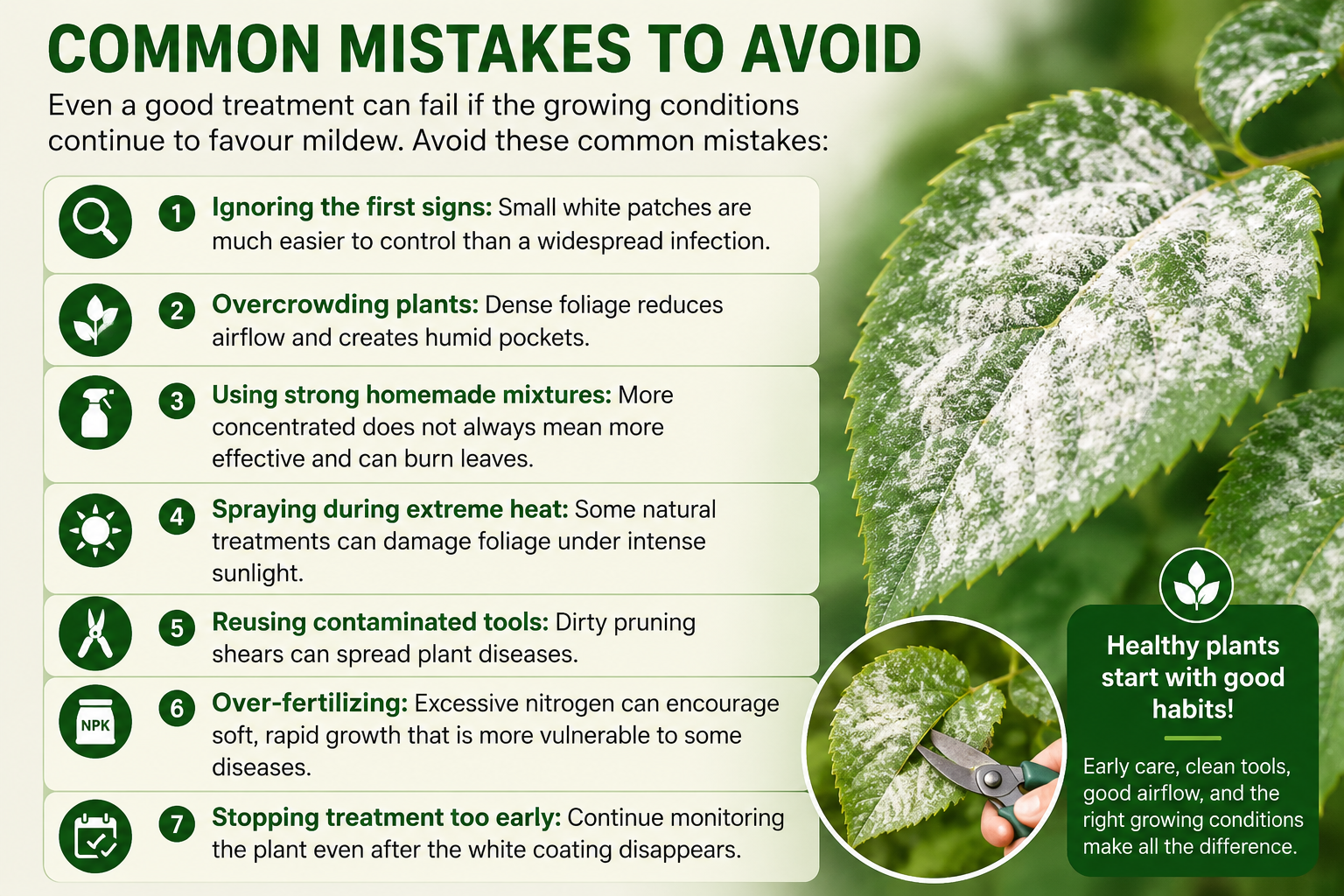
Even a good treatment can fail if the growing conditions continue to favour mildew. Avoid these common mistakes:
• Ignoring the first signs: Small white patches are much easier to control than a widespread infection. • Overcrowding plants: Dense foliage reduces airflow and creates humid pockets. • Using strong homemade mixtures: More concentrated does not always mean more effective and can burn leaves. • Spraying during extreme heat: Some natural treatments can damage foliage under intense sunlight. • Reusing contaminated tools: Dirty pruning shears can spread plant diseases. • Over-fertilizing: Excessive nitrogen can encourage soft, rapid growth that is more vulnerable to some diseases.
• Stopping treatment too early: Continue monitoring the plant even after the white coating disappears.
Expert Tips for Better Powdery Mildew Control
For better long-term results, think about prevention as much as treatment.
Check susceptible plants at least once or twice a week. Look underneath leaves as well as along stems and new growth.
If one plant repeatedly develops powdery mildew while nearby plants remain healthy, investigate its growing conditions. It may need better spacing, more suitable light, or improved airflow.
When using any homemade spray, always test it on a small area first. Different plant species and cultivars can have different sensitivities.
For severe or persistent infections, consider a commercially labelled fungicide that is appropriate for the specific plant and follow the product directions carefully.
Frequently Asked Questions
Can powdery mildew go away on its own?
Mild infections may slow down when conditions improve, but active mildew can continue spreading. Early removal, better airflow, and appropriate treatment usually give better results.
What is the best natural treatment for powdery mildew?
There is no single natural treatment that works for every plant. Early pruning, improved airflow, and carefully tested treatments such as baking soda or diluted milk can help control mild infections.
Can I use baking soda on all plants?
No. Some plants can be sensitive to sprays. Always test a small area first and avoid overly concentrated mixtures.
Does powdery mildew spread to other plants?
Yes. Fungal spores can spread between susceptible plants, especially when plants are crowded and airflow is poor. Inspect nearby plants regularly.
How can I prevent powdery mildew next season?
Use proper plant spacing, maintain good airflow, provide suitable sunlight, avoid excessive nitrogen fertilization, and inspect plants regularly for early symptoms.
Share:


Comments