Jade plant care can seem confusing when the thick green leaves begin to wrinkle, turn yellow, or suddenly fall from the stems. Fortunately, jade plants are hardy succulents that become easy to maintain once you understand their basic needs. Most problems are caused by overwatering, insufficient sunlight, or soil that stays wet for too long.
Whether you have recently purchased a small Crassula ovata or want to revive an older plant, a few simple changes can make a noticeable difference. This guide covers the correct light, watering method, soil, temperature, fertilizer, pruning, and repotting routine. Follow these beginner-friendly steps to keep your jade plant strong, compact, and healthy for many years.
What Is a Jade Plant?
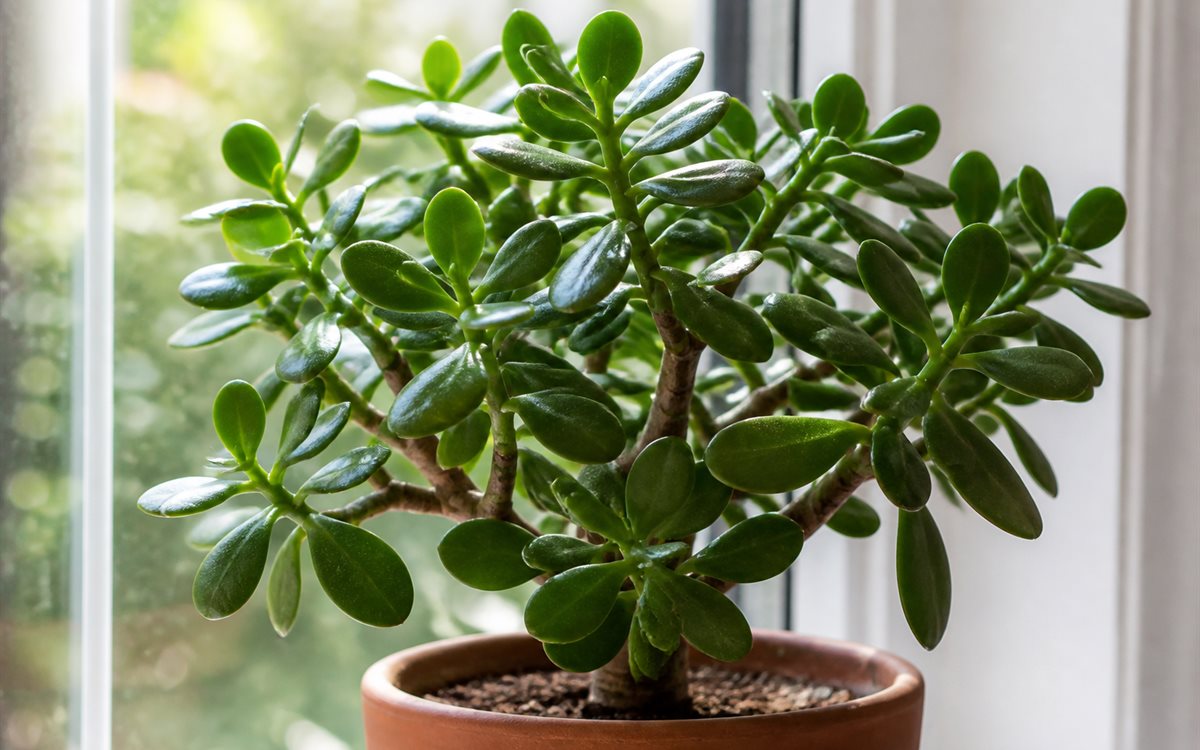
The jade plant, scientifically known as Crassula ovata, is a popular succulent originally from southern Africa. It stores water inside its thick leaves and fleshy stems, allowing it to survive dry conditions.
Jade plants are commonly grown indoors because they are attractive, long-lived, and relatively easy to maintain. A mature plant can develop a strong trunk and branching shape that resembles a miniature tree.
Healthy jade plants have firm leaves, sturdy stems, and compact growth. Some varieties also develop red leaf edges when they receive plenty of sunlight. Proper care is important because excess moisture and poor light can quickly lead to weak growth, falling leaves, or root rot.
How to Care for a Jade Plant
Give It Plenty of Bright Light
Place your jade plant near a bright south- or west-facing window. It should receive approximately four to six hours of bright light each day.
A jade plant that does not receive enough light may develop long, thin stems with large spaces between the leaves. Rotate the pot every one or two weeks so all sides receive equal light.
If your plant has been growing in shade, introduce it to direct sunlight gradually. A sudden move into intense sunlight can cause brown or pale sunburn patches.
Water Only When the Soil Is Dry
Check the soil before every watering. Push your finger about 1 to 2 inches into the potting mix. Water only when this layer feels dry.
When the plant needs water, soak the soil thoroughly until water drains from the bottom of the pot. Empty the saucer afterward so the roots do not remain in standing water.
Jade plants normally need more frequent watering during spring and summer. During winter, their growth slows and the soil takes longer to dry.
Use Fast-Draining Soil
Plant your jade in a commercial cactus or succulent potting mix. You can also improve ordinary potting soil by adding coarse perlite, pumice, or horticultural grit.
The soil should drain quickly after watering. Heavy soil that stays wet for several days can suffocate the roots and encourage fungal diseases.
Choose a Pot With Drainage
Always use a container with at least one drainage hole. Terracotta pots are especially useful because their porous material allows excess moisture to evaporate.
Select a pot only 1 to 2 inches wider than the root ball. An oversized container holds too much damp soil and increases the chance of overwatering.
Maintain Comfortable Temperatures
Jade plants grow well in normal indoor temperatures between 65°F and 75°F during the day. They can tolerate slightly cooler nighttime temperatures but should be protected from frost.
Keep the plant away from cold drafts, heating vents, air conditioners, and sudden temperature changes. Average household humidity is usually suitable, so misting is unnecessary.
Fertilize During Active Growth
Feed your jade plant with a balanced houseplant or succulent fertilizer at half strength every four to six weeks during spring and summer.
Apply fertilizer after watering rather than to completely dry soil. Stop or reduce feeding during fall and winter when the plant is growing slowly.
How to Prune and Repot a Jade Plant
Pruning for Bushier Growth
Pruning helps a jade plant develop more branches and a fuller shape. Use clean, sharp pruning shears and cut long stems just above a leaf node or branching point.
Spring and early summer are the best times to prune because the plant is actively growing. Remove damaged, weak, crossing, or unusually long stems first.
Avoid removing too much growth from a stressed or unhealthy plant. Allow it to recover from watering, pest, or root problems before carrying out major pruning.
When to Repot
Jade plants usually prefer being slightly root-bound, so they do not require frequent repotting. Repot every two to three years or when roots become crowded, drainage slows down, or the plant repeatedly falls over.
Choose a new pot only one size larger than the existing container. Fill it with fresh succulent soil and place the plant at the same depth it was growing before.
Wait several days before watering after repotting. This gives any damaged roots time to dry and heal, reducing the chance of rot.
Common Jade Plant Problems
Yellow or Mushy Leaves
Soft, yellow, translucent, or rapidly falling leaves usually indicate overwatering. Stop watering and allow the soil to dry before checking the condition of the roots.
Healthy roots should feel firm and appear pale or light brown. Brown, black, soft, or unpleasant-smelling roots are signs of rot and should be removed with a clean tool.
Wrinkled or Thin Leaves
Wrinkled leaves often mean the plant needs water. Check the soil first. If it is completely dry, water thoroughly until excess moisture drains from the pot.
If the soil is wet but the leaves remain wrinkled, the roots may be damaged and unable to absorb water properly.
Long and Leggy Stems
Long stems with widely spaced leaves indicate that the jade plant is not receiving enough sunlight. Move it gradually to a brighter position and rotate the pot regularly.
Existing stretched growth will not become compact again, but pruning can encourage stronger and fuller new growth.
Brown Spots on Leaves
Brown spots can be caused by sunburn, cold damage, physical injury, or prolonged dryness. Think about any recent changes in the plant’s location or care routine.
A small number of dry marks are usually cosmetic. However, spots that continue spreading may indicate a moisture or disease problem.
Mealybugs and Scale
Inspect the leaf joints and stems for white cotton-like material, sticky residue, or small brown bumps. These signs may indicate mealybugs or scale insects.
Isolate the affected plant and remove visible pests with a cotton swab lightly dipped in rubbing alcohol. Repeat the inspection weekly until no pests remain.
Common Jade Plant Care Mistakes to Avoid
Jade plants are forgiving, but repeating the wrong care habits can gradually weaken them. Avoid these common mistakes:
- Watering on a fixed schedule without checking whether the soil is dry.
- Using a pot without drainage and allowing water to collect around the roots.
- Keeping the plant in a dark corner where it cannot produce compact growth.
- Misting the leaves regularly even though jade plants prefer relatively dry air.
- Using ordinary heavy garden soil that remains wet and compacted.
- Applying too much fertilizer, which can burn the roots and damage the leaves.
- Moving the plant suddenly into intense sunlight, causing leaf scorch.
- Using an oversized pot that contains more wet soil than the roots require.
- Leaving water inside the saucer after watering.
- Repotting too frequently when the plant is already growing well.
Expert Tips for Healthy Jade Plant Growth
Learn to judge soil moisture by lifting the pot. A freshly watered pot feels noticeably heavier than one containing dry soil. With practice, this can help you recognize when watering is necessary.
Wipe dust from the leaves with a soft, slightly damp cloth. Clean leaves can absorb more light and also make it easier to notice pests or damage.
For bushier growth, prune long stems just above a leaf node during spring or early summer. New branches usually develop below the cut.
You can propagate a jade plant from a healthy stem cutting. Allow the cut end to dry for several days until it forms a callus, then place it in lightly moist succulent soil.
Keep newly planted cuttings in bright, indirect light and avoid soaking the soil while roots are forming.
Jade plants can be harmful to cats and dogs when eaten. Place the pot in a location that curious pets cannot reach.
Final Thoughts
Successful jade plant care depends on three basic things: bright light, fast-draining soil, and patience between waterings. Check the soil before adding water and make gradual changes whenever the plant needs a brighter location.
Follow these simple steps, observe how your plant responds, and adjust its routine when necessary. Try these tips today and share your jade plant questions or growing results in the comments. Subscribe to the Gardixo newsletter for more beginner-friendly plant care guides.


Comments