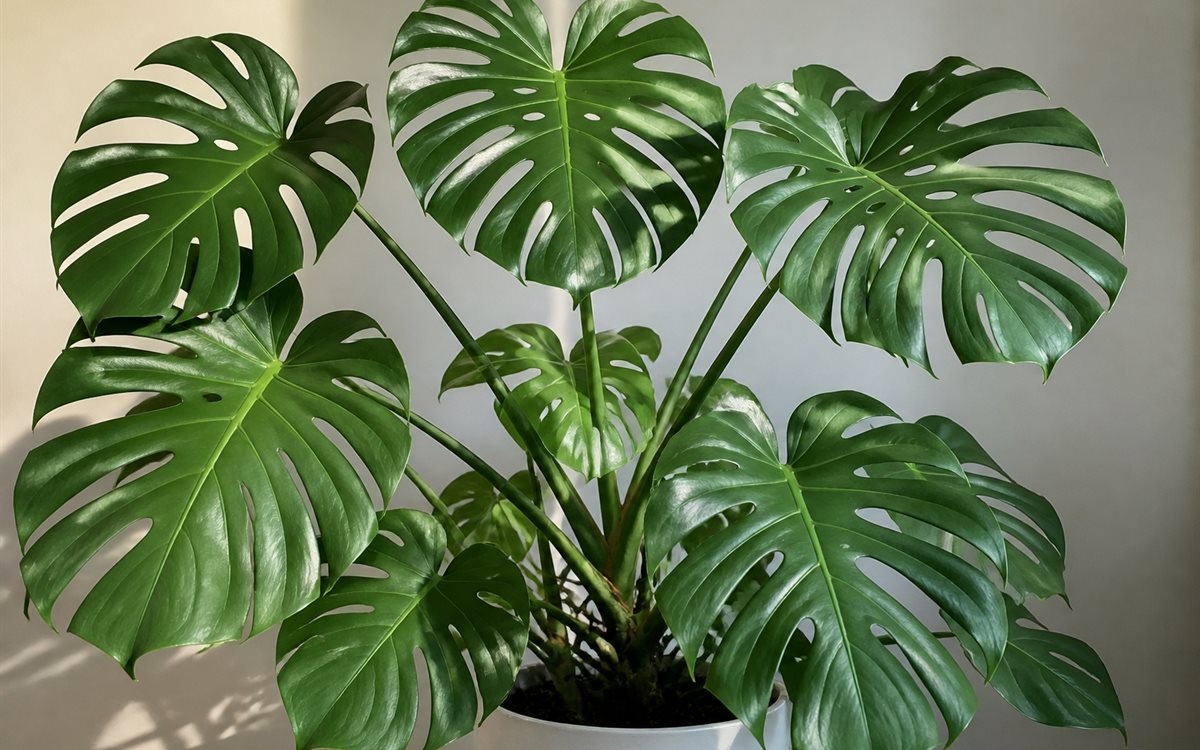
Is your Monstera growing slowly, developing yellow leaves, or looking less dramatic than the lush plants you see online? The good news is that Monstera plant care is easier than it looks once you understand a few basic needs. These tropical houseplants want bright filtered light, evenly moist but airy soil, and enough room to climb.
In this guide, you will learn exactly where to place your plant, when to water it, what soil to use, and how to encourage larger leaves with natural splits. You will also discover the most common beginner mistakes and simple fixes that can help a tired Monstera recover. Whether you have a young Monstera deliciosa or an established climbing plant, these practical steps will help you grow it with confidence.
Why Proper Monstera Care Matters
Monstera deliciosa comes from tropical forests, where it grows beneath taller trees and climbs toward brighter light. Its aerial roots attach to trunks, while its broad leaves capture filtered sunlight. Recreating those conditions indoors helps the plant grow steadily instead of merely surviving.
Healthy care supports strong roots, larger leaves, and better fenestration—the holes and splits that make Monstera foliage so distinctive. It also lowers the risk of root rot, pests, weak stems, and permanently damaged leaves.
A Monstera can tolerate occasional neglect, but repeated stress often appears as yellowing, brown edges, drooping growth, or long bare stems. Paying attention to light, moisture, soil structure, and support gives you a fuller and more attractive plant over time.
Give Your Monstera the Right Light
Place your Monstera in bright, indirect light. A spot a few feet from an east-, west-, or south-facing window usually works well, especially when a sheer curtain softens harsh afternoon sun.
Too little light causes slow growth, smaller leaves, and long spaces between leaf nodes. Too much direct sun can bleach or scorch the foliage, leaving pale patches or crispy brown marks.
Use these placement tips:
• Rotate the pot a quarter turn every one or two weeks for balanced growth. • Move the plant closer to a window if new leaves remain small. • Pull it back from intense glass if leaves feel hot or develop faded patches. • Use a full-spectrum grow light when natural light is limited.
Remember that mature leaf splits depend on several factors, including age, light, climbing support, and overall plant health. A young plant may produce solid leaves even when you are caring for it correctly.
Water Without Causing Root Rot
For reliable Monstera plant care, water according to the soil rather than following a fixed calendar. Push your finger about 2 inches into the soil. When that upper layer feels dry, water slowly until excess moisture drains from the bottom of the pot.
Empty the saucer or decorative outer pot afterward. Leaving the roots in standing water deprives them of oxygen and encourages root rot. Your watering frequency will change with the season. Plants usually dry faster during warm, bright months and more slowly during cool or low-light periods. Pot size, soil mix, humidity, and airflow also affect how quickly the soil dries.
Possible signs of overwatering include:
• Yellow lower leaves • Soft or dark stems • A sour smell coming from the soil • Persistent drooping while the soil is still wet
Signs of underwatering may include curled leaves, dry brown edges, very dry soil, and a pot that feels unusually light. Water thoroughly instead of giving frequent small sips, which can leave part of the root ball dry.
Use Airy Soil, Humidity, and Proper Feeding
Monstera roots need both moisture and oxygen. Use a chunky, fast-draining indoor plant mix rather than dense garden soil.
A practical Monstera soil blend can include:
• Two parts quality indoor potting mix • One part orchid bark • One part perlite or pumice • A small amount of coco coir or worm castings, if desired
Choose a pot with at least one drainage hole. Repot only when roots circle the container heavily, grow out of the drainage holes, or the soil starts drying much faster than usual.
Move the plant into a pot only 1 to 2 inches wider than its current container. An oversized pot holds extra wet soil around the roots and may increase the risk of rot.
Average household humidity is often acceptable, but humidity around 50% to 60% can support smoother new leaves. Keep the plant away from cold drafts, heating vents, air conditioners, and sudden temperature changes. Feed your Monstera during active growth with a balanced liquid houseplant fertilizer diluted according to the product label. Feeding every four to six weeks during spring and summer is enough for many plants. Reduce or stop feeding when growth slows, and never fertilize severely dry or damaged roots.
Add Support, Prune, and Clean the Leaves
A Monstera is naturally a climbing plant, so adding support can make a major difference to its shape and leaf size. Attach the main stems loosely to a moss pole, coir pole, wooden plank, or sturdy trellis.
Position aerial roots toward the support instead of cutting every one off. Support encourages upright growth and may help the plant produce progressively larger foliage.
Use soft plant ties and leave enough space for the stems to become thicker. Avoid tying the stems so tightly that the material cuts into them.
Prune yellow, damaged, or badly positioned leaves with clean, sharp pruning shears. Cut the leaf stem close to the main vine without damaging the node.
To control the plant’s height or propagate it, take a stem cutting that includes at least one healthy node. A single leaf without a node cannot grow into a complete new vine.
Dust the leaves every few weeks using a soft, damp cloth. Clean foliage looks better and captures light more efficiently. Avoid commercial leaf-shine products because they may leave residue and attract more dust.
Common Monstera Care Mistakes to Avoid
Even a simple plant care routine can cause problems when it is followed too rigidly. Avoid these common Monstera mistakes:
- Watering on the same day every week
Soil does not dry according to a perfect schedule. Check the moisture level before adding more water.
- Using an oversized pot
A pot that is too large holds excess wet soil around the roots and increases the risk of root rot.
- Keeping the plant in a dark corner
A Monstera may survive in low light, but it will often stretch, lean toward the nearest window, and produce smaller leaves.
- Depending only on misting
Misting raises humidity for only a short period. A humidifier, pebble tray, or grouping plants together may provide more consistent conditions.
- Fertilizing a stressed plant
Extra fertilizer will not repair rotten roots, sunburn, pest damage, or severe dehydration. Identify and correct the main problem first.
- Expecting damaged leaves to recover
Yellow, torn, or scorched parts of a leaf will not turn green again. Improve the growing conditions so future leaves develop more successfully.
Good Monstera plant care is based on observation. Check the roots, soil, lighting, pests, and recent environmental changes before treating a symptom. One yellow lower leaf does not always mean the plant is sick because older leaves naturally age and fall.
Expert Tips for Bigger, Healthier Monstera Leaves
Small adjustments can produce noticeable improvements over several growing seasons.
• Encourage climbing: Secure the vine to a support while it is young so it grows upward instead of spreading across the floor.
• Keep the light consistent: Bright indirect light supports stronger stems, healthier growth, and larger leaves.
• Guide aerial roots: Direct them toward a moss pole or tuck them into the soil when practical.
• Inspect new growth: Thrips, spider mites, mealybugs, and scale often hide around unfurling leaves, stems, and leaf undersides.
• Be patient with fenestrations: Mature splits develop gradually and cannot be forced by applying extra fertilizer.
• Quarantine new plants: Keep new houseplants separate for two to three weeks and inspect them for pests before placing them near your existing collection.
When a new leaf is unfurling, avoid touching it or trying to open it manually. The tender tissue tears easily. Stable warmth, suitable moisture, and moderate humidity will allow it to open naturally.
You can also wipe the support pole occasionally and check that the plant ties are not becoming too tight. As the Monstera grows, adjust the ties and add a taller support when needed.
Conclusion: Keep Your Monstera Routine Simple
Successful Monstera plant care comes down to a few repeatable habits: provide bright indirect light, water only after the upper soil dries, use an airy potting mix, and give the vine something sturdy to climb.
Watch your plant instead of relying on a rigid schedule, and make only one major change at a time when problems appear. This makes it easier to understand what is helping or harming the plant.
Try these steps with your Monstera this week, then note how quickly its soil dries and where the new growth points toward the light. Share your biggest Monstera question in the comments, and subscribe to the Gardixo newsletter for more practical indoor plant care guides.


Comments