Spider plants are among the easiest houseplants to grow, making them a great choice for beginners and busy plant owners. Their long, arching leaves and small plantlets make them attractive additions to shelves, desks, bedrooms, and living spaces. However, even an easy-care plant can develop brown tips, yellow leaves, or slow growth when its basic needs are overlooked. Good spider plant care mainly comes down to providing bright indirect light, sensible watering, well-draining soil, and occasional feeding. In this guide, you’ll learn exactly how to care for a spider plant, how to solve common problems, and how to encourage healthy new growth and baby spider plants.
Spider Plant Care: Complete Guide for Healthy Growth
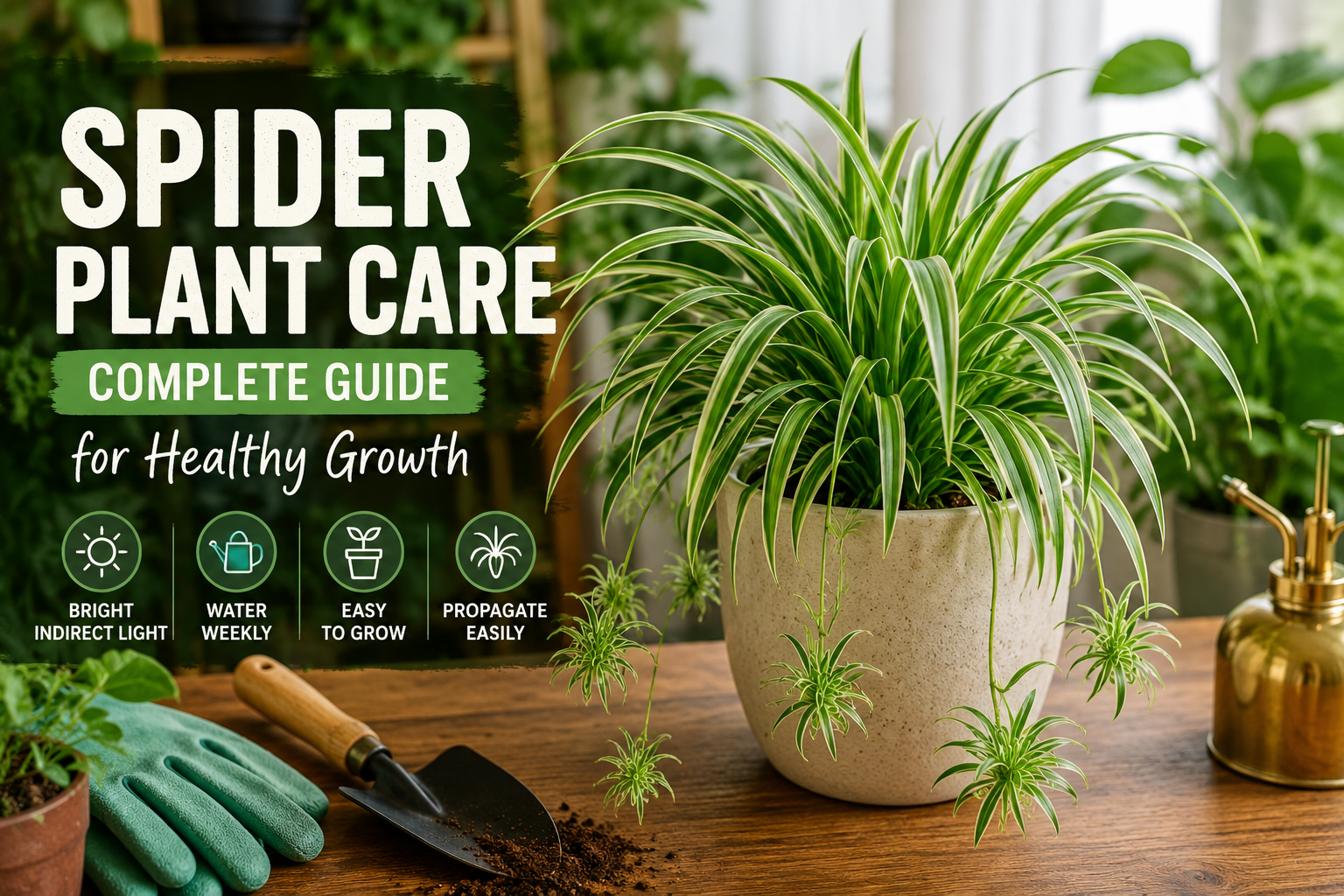
What Is a Spider Plant?
Spider plant (Chlorophytum comosum) is a popular perennial houseplant native to parts of tropical and southern Africa. It is recognised by its narrow, arching leaves and long stems that produce small baby plants, often called spiderettes.
Spider plants are forgiving and adapt well to indoor conditions. They can grow in hanging baskets, pots on shelves, or bright bathrooms and offices. Their ability to produce new plantlets also makes them easy to propagate and share.
How to Care for a Spider Plant
Spider plants do best when their basic growing conditions remain consistent. Give them bright indirect light, water when the upper layer of soil begins to dry, and use a loose potting mix that drains well.
Avoid placing the plant in harsh direct afternoon sunlight because it can scorch the leaves. At the same time, very low light can result in slower growth and fewer spiderettes.
During the active growing season, feed your spider plant occasionally with a balanced, diluted houseplant fertiliser. Avoid excessive fertiliser because salt buildup can contribute to brown leaf tips.
Best Light, Water, and Soil
Spider plants prefer bright, indirect light. A spot near an east- or north-facing window can work well, while stronger sunlight should be filtered with a sheer curtain.
Water when the top few centimetres of potting mix feel dry. Water thoroughly until excess moisture drains from the bottom of the pot, then empty any water sitting in the saucer.
Use a well-draining indoor potting mix. A standard houseplant mix amended with perlite can help improve drainage and reduce the risk of waterlogged roots.
In hot Australian weather, check the soil more frequently because containers can dry faster. However, avoid watering on a fixed schedule if the soil is still wet.
How to Encourage Healthy Growth and Spiderettes
Healthy spider plants naturally produce long stems with baby spider plants when growing conditions are favourable. Give the parent plant plenty of bright indirect light and avoid excessive fertilising.
Spiderettes can be left attached to the parent plant or propagated once they have developed small roots. To propagate, place a rooted baby plant into a small pot filled with moist, well-draining potting mix.
Keep the young plant lightly moist while its root system becomes established. Once it begins producing fresh growth, care for it like a mature spider plant.
Common Spider Plant Problems and Solutions
Brown leaf tips are one of the most common spider plant problems. They can be linked to inconsistent watering, very dry air, excessive fertiliser salts, or minerals in tap water.
Yellow leaves can occur when the plant is overwatered or the soil remains wet for too long. Check the drainage holes and allow the upper layer of soil to dry before watering again.
If your spider plant is not producing babies, check its light and overall growing conditions. Very low light can reduce vigorous growth and spiderette production.
Drooping leaves may mean the plant needs water, but they can also occur when roots are stressed by excessive moisture. Always check the soil before watering.
Expert Tips for Growing a Healthy Spider Plant
For stronger long-term growth, keep your spider plant slightly root-bound rather than moving it into a very large pot. Repot when roots are filling the container or growing through the drainage holes.
Rotate the pot occasionally so the plant grows evenly toward the light. Remove completely brown or damaged leaves with clean scissors.
If your tap water contains high levels of minerals, using filtered or rainwater occasionally may help reduce brown leaf tips. This can be especially useful when the plant repeatedly develops brown tips despite otherwise good care.
Keep spider plants away from intense heat sources and cold drafts. A stable indoor environment with good indirect light is usually enough for healthy growth.
Frequently Asked Questions
How often should I water a spider plant?
Water when the top few centimetres of soil feel dry. Always check the soil before watering rather than following a strict weekly schedule.
Does a spider plant need direct sunlight?
Spider plants prefer bright indirect light. Strong direct afternoon sunlight can scorch their leaves.
Why are my spider plant leaves turning brown?
Brown tips can result from inconsistent watering, dry conditions, excess fertiliser salts, or mineral-rich water.
How do I get my spider plant to produce babies?
Provide bright indirect light, consistent care, and avoid excessive fertilising. Healthy mature plants naturally produce spiderettes.
When should I repot a spider plant?
Repot when the roots become crowded, grow through the drainage holes, or the plant dries out unusually quickly after watering.
Share:


Comments