Planning a vegetable garden can feel confusing when you are unsure where to place each crop, how much space to leave, or where to create paths. The right vegetable garden layout ideas can make your garden easier to plant, water, harvest and maintain. A good layout does not need to be complicated or expensive. Even a small backyard, courtyard or raised bed can become productive when you plan around sunlight, plant spacing and easy access. In this guide, we will look at practical layouts that work for beginners, along with simple planning tips to help you make the most of your available space. The goal is to create a garden that looks organised while giving your vegetables the conditions they need to grow well.
Vegetable Garden Layout Ideas for a Productive Garden
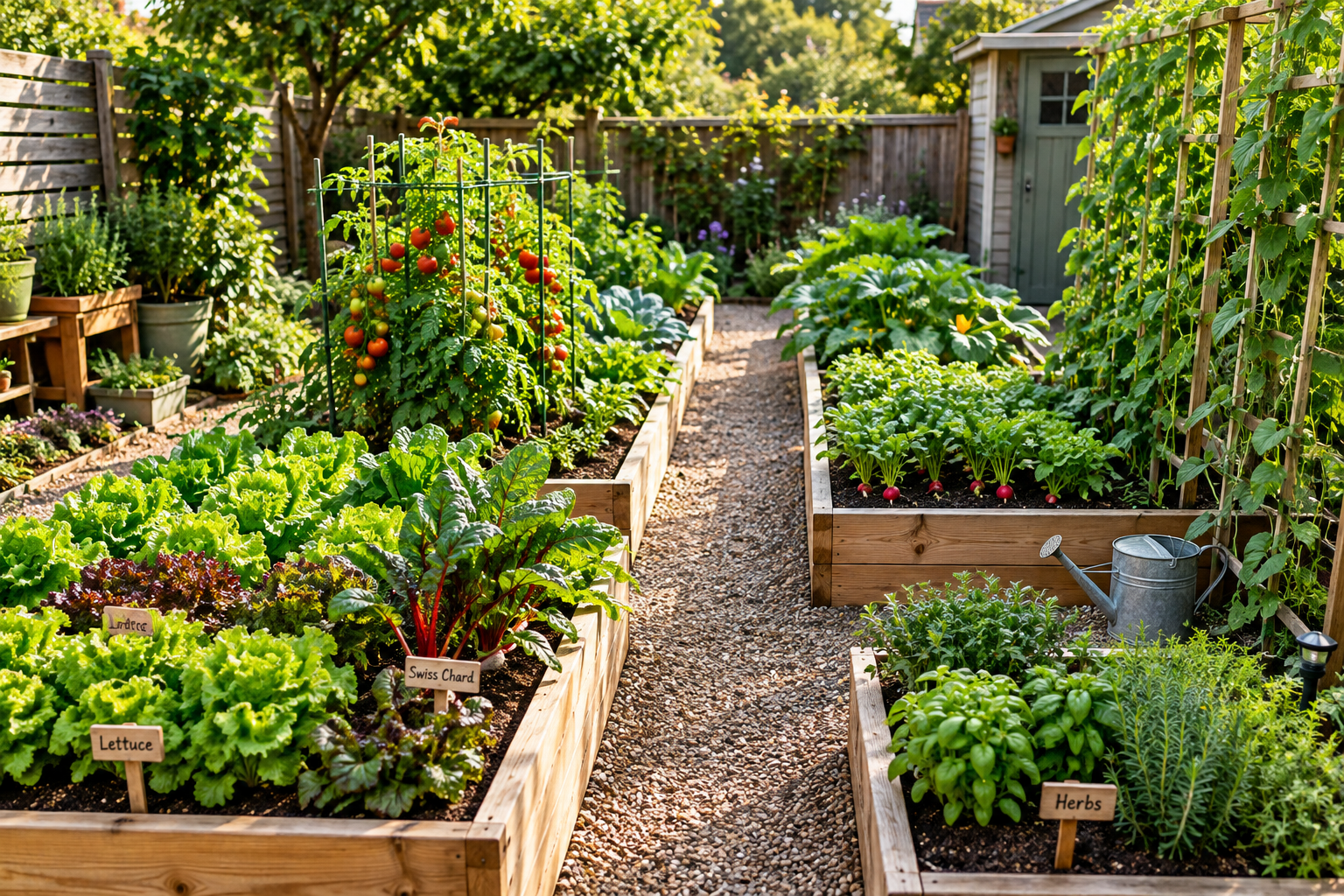
Why Your Vegetable Garden Layout Matters
A well-planned vegetable garden makes everyday gardening much easier. When beds, paths and plants are positioned thoughtfully, you can reach your crops without stepping on the soil, water plants more efficiently and harvest vegetables without damaging nearby growth.
Sunlight is one of the most important things to consider. Most vegetables need several hours of direct sunlight each day, so place taller crops where they will not cast long shadows over smaller plants.
Good airflow also matters. Leaving enough space between plants and avoiding overcrowded beds helps foliage dry more quickly and makes it easier to spot pests or signs of disease.
Your layout should also match the way you garden. Keep frequently harvested crops, such as lettuce, herbs and leafy greens, in easy-to-reach areas. Taller crops can go toward the back or northern side of a garden so they are less likely to shade shorter vegetables.
The best layout is not necessarily the most complicated one. A simple design that gives every plant enough light, space and water is usually easier to maintain and more productive over time.
7 Vegetable Garden Layout Ideas for Beginners
There is no single perfect garden design. Choose a layout that fits your available space, the vegetables you want to grow and the amount of time you can spend maintaining the garden.
- Raised Bed Layout
Raised beds are easy to organise and work particularly well for beginners. Divide the space into separate beds with paths between them, keeping each bed narrow enough to reach the middle without stepping inside.
- Square Foot Garden Layout
Divide a growing bed into small square sections and dedicate each section to a different crop. This makes spacing easier to understand and helps you grow a variety of vegetables in a limited area.
- Row Garden Layout
Traditional rows are useful when you have a larger garden. Keep straight paths between rows so you can move easily while planting, weeding and harvesting.
- Block Planting Layout
Instead of long rows, plant vegetables in compact blocks. This can make better use of garden space and reduce the amount of soil left unused between crops.
- Small Backyard Layout
For a small garden, combine a few compact beds with vertical supports for climbing vegetables. Grow crops such as beans, peas and cucumbers upward to save valuable ground space.
- Container Vegetable Layout
Containers allow you to grow vegetables on patios, balconies and other areas where planting directly into the ground is not practical. Group containers according to their sunlight and watering needs.
- Mixed Vegetable and Herb Layout
Combine vegetables with herbs in the same growing area. Keep frequently used herbs near paths or the kitchen while placing larger vegetables where they have enough room to develop.
How to Plan Your Vegetable Garden Layout
Before planting, spend a little time planning the space. A simple sketch on paper can help you avoid overcrowding and make better use of the available garden area.
Start by observing the sunlight. Watch your garden during the day and identify the areas that receive the most direct sun. Put sun-loving vegetables in these spots and reserve shadier areas for crops that tolerate less light.
Next, measure the growing area. Mark the position of existing trees, fences, walls and other features that may affect sunlight or access.
Plan paths before filling the beds with plants. Leave enough room to walk, carry a watering can and reach the plants comfortably. Avoid creating beds that are too wide to reach from the edges.
Group vegetables with similar needs together. Crops that require frequent watering can be placed near a convenient water source, while plants with similar sunlight requirements can share the same bed.
Think about mature plant size too. A seedling may look tiny when planted, but many vegetables become much larger during the growing season. Check the recommended spacing before planting.
Finally, leave some flexibility in your design. A vegetable garden changes throughout the year, so a layout that allows crops to be replaced or rotated is more useful than one that is permanently fixed.
Common Vegetable Garden Layout Mistakes
Even a carefully planned garden can become difficult to manage if a few common layout mistakes are overlooked.
• Overcrowding plants: Planting vegetables too close together can reduce airflow and make harvesting difficult. Follow the recommended spacing for each crop.
• Ignoring sunlight: Avoid placing tall vegetables where they will block sunlight from shorter plants. Consider how large each crop will become before deciding where it belongs.
•Making beds too wide: If you cannot comfortably reach the centre of a bed, you may end up stepping on the soil or leaving parts of the garden unattended.
• Forgetting paths: A garden without practical walking space can quickly become difficult to weed, water and harvest.
• Mixing plants with different watering needs: Grouping crops according to their water requirements can make irrigation much easier.
• Planting everything at once: Growing every crop at the same time can create a large harvest that is difficult to use. Staggering plantings can provide a more consistent supply of vegetables.
A good layout should make gardening simpler rather than create extra work. If a design looks attractive but is difficult to access, adjust it before planting.
Pro Tips for a More Productive Vegetable Garden
Small improvements to your layout can make a noticeable difference as the garden develops.
Keep frequently harvested crops close to the main path. Lettuce, herbs and other quick-picking vegetables are easier to manage when you do not have to walk through the entire garden to reach them.
Use vertical space wherever possible. Trellises and supports can help climbing crops grow upward instead of spreading across valuable ground space.
Try succession planting when you have limited room. Once one quick-growing crop has finished, replace it with another suitable vegetable rather than leaving the space empty.
Crop rotation is another useful strategy. Avoid growing the same type of vegetable in exactly the same location season after season when possible. Rotating crop families can help you manage soil health and reduce the build-up of some pests and diseases.
Leave enough space around paths and watering points for comfortable access. A few extra centimetres of practical working space can save a lot of frustration later.
Finally, keep notes about what you plant and where it grows. Over time, these records can help you identify which areas receive the best sunlight and which vegetables perform particularly well in your garden.
Easy Vegetable Garden Layout Tips for Small Spaces
You do not need a large backyard to grow a useful selection of vegetables. The key is to make every part of the growing area work efficiently.
Start with one or two manageable beds rather than trying to fill the entire space. Smaller beds are easier to prepare, water and maintain, especially when you are new to vegetable gardening.
Use vertical supports for climbing crops such as beans, peas and cucumbers. Growing upward can free ground space for smaller vegetables and herbs.
Containers can also be placed around sunny areas of a patio or backyard. Keep them where they are easy to water and move them when necessary.
Choose compact or quick-growing vegetables when space is limited. Leafy greens, herbs and many salad crops can provide useful harvests without requiring a large amount of room.
Leave clear access between containers and beds. It is tempting to squeeze in one more plant, but a little open space makes watering, harvesting and maintenance much easier.
The best small-space design is one that you can actually maintain. Start simple, learn how your space behaves throughout the seasons and adjust your layout as you gain experience.
Frequently Asked Questions
What is the best layout for a vegetable garden?
The best layout depends on your space, sunlight and the vegetables you want to grow. Raised beds, rows and block planting are all practical choices. The most useful design provides good sunlight, enough plant spacing, clear paths and easy access for watering and harvesting.
What vegetables should be planted together?
Vegetables with similar sunlight, watering and space requirements are usually easiest to manage together. You can also combine vegetables with herbs and other compatible plants. The important thing is to give each crop enough room and avoid overcrowding the bed.
How wide should a vegetable garden bed be?
A garden bed should be narrow enough that you can comfortably reach the plants from the edges without stepping on the soil. For many accessible raised beds, around 1 to 1.2 metres wide works well, although the ideal width depends on your reach and the garden design.
How do I arrange vegetables according to height?
Place taller crops toward the back or on the side where they are least likely to shade shorter plants. Trellised beans, peas and climbing crops can be positioned carefully so they grow upward while leaving more sunlight available for lower-growing vegetables.
Can I grow vegetables in a small garden?
Yes. Small gardens can be productive when you use raised beds, containers and vertical growing space efficiently. Choose compact crops, plan clear paths and avoid overcrowding. Growing a smaller number of healthy plants is often more successful than trying to fit too many vegetables into one area.
Share:


Comments